An air conditioner doesn’t usually fail without giving you a few clues first. Maybe it needs another repair. Maybe one room feels noticeably warmer than the rest of the house. Or perhaps you’re finding yourself calling an HVAC company every few months for one problem after another.
At first, these issues can seem manageable. But when they become a pattern, it’s worth stepping back and asking a bigger question: is the system still worth repairing?
Also read: Choosing the Right Water Solution for a Healthier…
Sometimes a relatively small fix is all that’s needed. Other times, continuing to repair an aging air conditioner simply delays an inevitable replacement.
Frequent Breakdowns Are More Than an Inconvenience
A single repair isn’t necessarily a reason to replace your cooling system. Equipment can develop isolated problems, even when it’s generally in good condition.
The concern is frequent breakdowns.
Also read: Keeping Your Pond Water Clear: Testing, Filter Maintenance,…
If the same air conditioner keeps needing attention, repair costs can start adding up. More importantly, repeated failures may indicate that several components are reaching the end of their useful lives.
Older systems can also become harder to service if certain parts are no longer readily available.
Before approving another expensive repair, consider the system’s age, recent repair history, efficiency, and overall condition.
Also read: The Best Time to Move House: Timing Your…
A professional evaluation can help determine whether another repair is reasonable or whether replacement would be a better long-term investment.
Uneven Cooling Can Signal a Bigger Problem
Most homeowners expect their air conditioner to keep the entire house reasonably comfortable.
When one room feels chilly while another feels noticeably warm, something may be interfering with proper airflow.
Also read: When Your Water Needs More Than a Quick…
Uneven cooling can have several causes. Blocked vents, leaking ductwork, inadequate insulation, thermostat placement, and equipment problems can all contribute.
So, don’t automatically assume the air conditioner itself is failing.
A technician should inspect the system and determine whether the issue is related to the equipment or something else within the home.
Also read: How Smart Water Protection Can Help Prevent Small…
Sometimes sealing a duct or correcting an airflow problem is enough. In other cases, an aging air conditioner may simply no longer be capable of delivering consistent comfort.
Rising Energy Costs Deserve Attention
Energy prices change, and summer usage naturally increases when temperatures climb. Still, a noticeable increase in cooling costs can sometimes point toward declining HVAC efficiency.
An older system may need to run longer to achieve the same temperature it once reached easily.
Dirty filters, clogged coils, refrigerant-related issues, duct leaks, and failing components can all contribute to inefficient operation.
If your energy bills have increased without a major change in your habits, have the system inspected before assuming the solution is simply turning the thermostat higher or lower.
Is Another Repair Really Worth It?
This is one of the hardest questions for homeowners.
Imagine an older air conditioner that needs a major component replaced. The repair might restore operation, but what happens if another expensive component fails six months later?
There’s no universal answer, but several factors can help.
Consider the equipment’s age, repair frequency, estimated repair cost, energy performance, warranty coverage, and expected remaining lifespan.
A relatively new system with a minor issue may be worth repairing. An older system with repeated failures may be a different story.
Getting an honest second opinion can also be worthwhile when the repair decision feels unclear.
What Professional Replacement Services Actually Involve
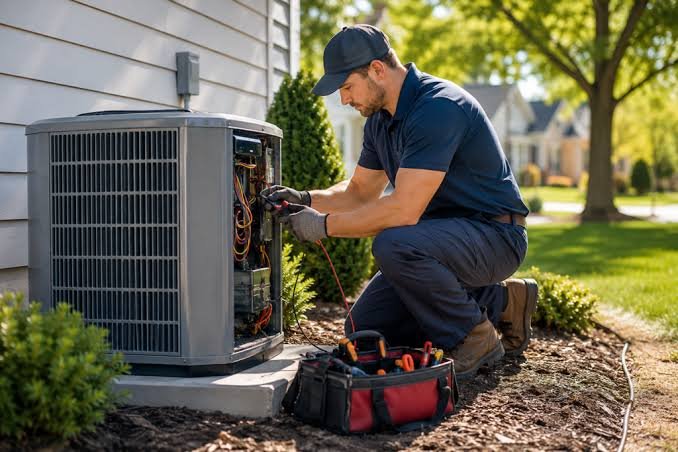
If replacement becomes the better option, professional a/c replacement services can make the process much less stressful.
A good contractor should evaluate the property before recommending equipment. Home size, insulation, windows, ductwork, local climate, occupancy, and existing HVAC configuration can all influence the appropriate system size.
Bigger isn’t automatically better.
An oversized air conditioner can cycle too frequently, while an undersized unit may run constantly during extreme weather.
Professional installation also matters. Refrigerant connections, electrical components, airflow, drainage, thermostat controls, and system commissioning all need to be handled correctly.
The quality of the installation can have a major effect on how well the new equipment performs.
Don’t Choose a Replacement Based Only on Price
It’s understandable to compare quotes and look for a good deal.
But the lowest initial price isn’t always the lowest overall cost.
Consider equipment efficiency, warranty coverage, installation quality, maintenance requirements, expected lifespan, and operating costs.
A slightly more expensive system may provide better long-term value if it’s properly sized and more efficient.
At the same time, don’t assume the most expensive equipment is automatically the best choice. The right system should match the actual needs of the property.
Think About the Whole HVAC System
Replacing the outdoor air conditioner may not solve every comfort problem.
If ductwork is damaged or poorly insulated, conditioned air can still be lost. If the air handler is struggling, airflow may remain inconsistent. If the home has significant air leaks, the new system may have to work harder than necessary.
That’s why a replacement assessment should consider the complete cooling system.
Sometimes improving insulation or repairing ductwork alongside the new equipment can make a noticeable difference.
Maintenance Doesn’t End After Replacement
A new air conditioner still needs attention.
Filters should be replaced as recommended. Outdoor equipment should remain clear of leaves and debris. Professional maintenance can help inspect coils, electrical connections, drainage, airflow, and other components.
Regular care can also help identify small problems before they become expensive repairs.
Think of it as protecting the investment you just made.
Plan Before the System Completely Fails
If your air conditioner is already showing signs of age, don’t wait until the hottest day of the year to start thinking about replacement.
Planning ahead gives you time to research contractors, compare equipment, ask questions, and understand the total cost.
More importantly, you get to make the decision calmly instead of under pressure.
A Better Cooling System Can Bring Back Peace of Mind
Frequent repairs and inconsistent temperatures can turn something as simple as staying cool into a constant headache.
If your air conditioner is struggling, start by finding out why. It may need a straightforward repair. Or it may be telling you that its working life is coming to an end.
With the right assessment, proper equipment selection, and quality installation, replacing an aging system can restore reliable comfort and reduce the worry of wondering when the next breakdown will happen.
Sometimes the smartest HVAC decision isn’t fixing the same problem one more time. It’s choosing a better path forward.