
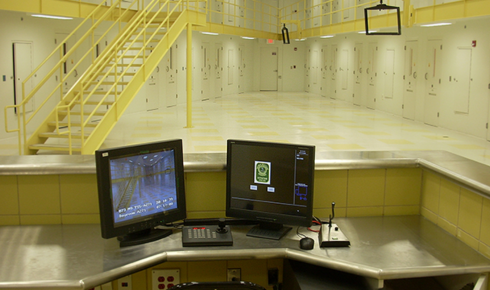
Security-focused facilities rely heavily on dependable door systems that perform without hesitation. These doors face daily strain from constant use, force, and environmental changes, yet they must remain consistent and structurally sound. Cornerstone detention center doors are built with features that support long-term durability, especially in facilities using modular jails or high-security layouts.
Reinforced Hollow-metal Door Shells Built for Sustained Impact Resistance
A reinforced hollow-metal shell is the backbone of a detention door, providing the strength needed to absorb repeated impact. These shells are formed from thick, high-quality steel that does not bend or deform easily even under direct force. By distributing shock across the door’s interior structure, the shell helps maintain its shape throughout years of heavy use. This reinforcement also protects internal components that must remain functional at all times. Lock mechanisms and hinges depend on a stable door body to operate correctly, and reinforced shells minimize strain on these parts. Facilities working with Cornerstone detention equipment contractors benefit from door systems built with reliable impact resistance at their foundation.
Heavy-gauge Steel Frames Engineered to Withstand Forced Entry Attempts
Frames carry a significant load in any detention environment, and heavy-gauge steel gives them the stability required to resist forced entry attempts. The density and thickness of the steel create a rigid barrier that prevents prying, bending, or cracking. This strength ensures the door remains secure even under aggressive pressure.
Beyond resisting entry attempts, strong frames support smooth door operation. Sliding, swinging, and specialty doors all rely on frames that stay aligned despite vibration and repeated use. Cornerstone prison supply manufacturers provide strong frame systems that enhance protection in correctional settings.
Welded Frame Corner Joints for Enhanced Structural Integrity
Corner joints are key stress points, and welded connections reinforce those areas to prevent separation. Continuous welds bind the corners tightly, creating a unified structure that functions as a single piece rather than multiple assembled components. This construction reduces flexibility in the frame and increases its overall durability.
A stronger frame means fewer maintenance issues over the door’s lifespan. Welded joints remove the risk of screws loosening or corners shifting out of alignment. Facilities outfitted by a Cornerstone security detention equipment contractor often appreciate the stability these welded joints bring to demanding environments.
Detention-grade Locking Hardware Designed for Continuous High-use Cycles
The locking hardware used in detention center doors must endure thousands of cycles without weakening. Detention-grade hardware is built with reinforced parts that resist wear from constant operation. Locks are engineered for smooth engagement, secure positioning, and long-term reliability.
Hardware designed for these environments also minimizes failure points. Internal components are often heat-treated or precision-machined to maintain consistent performance. Cornerstone detention center doors frequently incorporate advanced locking hardware capable of supporting rigorous daily use.
Lock Preparations Secured with Threaded Studs and Lock Nuts
Threaded studs and lock nuts add stability to lock preparations, preventing shifting or loosening over time. This method secures locking hardware firmly to the door and frame, distributing pressure evenly to reduce mechanical stress. The installation remains tight, even under vibration or heavy contact.
These secure fastening methods are essential in correctional environments where doors must hold up under unpredictable conditions. Threaded fasteners also simplify maintenance and allow technicians to replace components without compromising structural integrity.
Integrated Vision and Pass-through Options Without Compromising Strength
Observation windows and pass-through panels must be incorporated without weakening the door. Reinforced frames around these openings help keep the structure strong while still providing essential communication and visibility functions. These features allow staff to perform checks or pass documents safely.
Security remains uncompromised because each opening is reinforced to match the strength of the surrounding door. Facilities using modular jails often rely on integrated features like these to maintain efficiency, safety, and clear lines of oversight.
Security Glazing Options Using Wire Mesh or Polycarbonate Materials
Security glazing prevents breakage and tampering while still allowing visibility. Wire mesh glazing embeds a strong metal grid inside the glass, making shattering extremely difficult. Polycarbonate glazing, on the other hand, offers high impact resistance with a clear, durable surface that resists cracking.
Both glazing options extend the life of the door and improve overall safety. They meet the demands of correctional environments where aggressive contact or repeated force is likely. These materials help reinforce the secure design found in Cornerstone detention center doors.
Sliding Door Track Systems Designed for Heavy Operational Loads
Sliding doors depend on strong track systems to move smoothly under heavy loads. Tracks made from reinforced steel minimize wear from repeated opening and closing cycles. The design ensures consistent operation even when exposed to long-term strain.
Tracks play an important role in reducing mechanical friction. With proper construction, the door glides reliably and requires fewer repairs. Facilities employing modular jails benefit from track systems that support efficient workflows and controlled movement.
Tamper-resistant Fasteners Suited for Correctional Facility Environments
Tamper-resistant fasteners prevent unauthorized removal of door components. These fasteners require specialized tools, making it nearly impossible for individuals inside a secured area to disassemble or compromise the door. Their design adds an additional layer of protection to the overall structure.
Such fasteners also reduce maintenance concerns by staying firmly in place under heavy use. They maintain door integrity even when subjected to vibration, impact, or environmental stress. For those seeking strong, dependable detention solutions, Cornerstone offers systems engineered to meet the rigorous demands of correctional security environments.